Site Specific: TRI Art and Culture I Kolkata
2024
Curated by Phalguni Guiliani
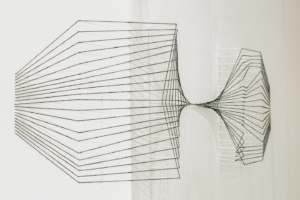
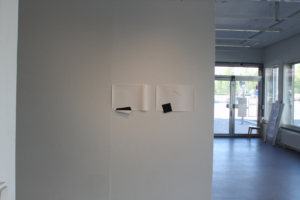
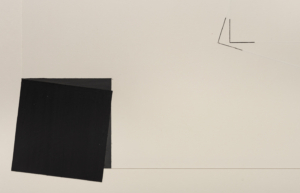
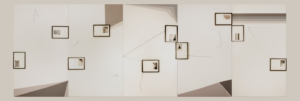
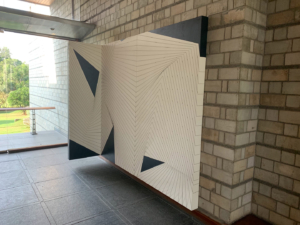
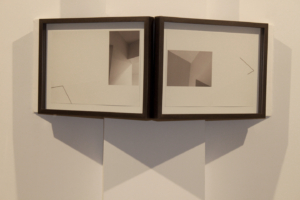
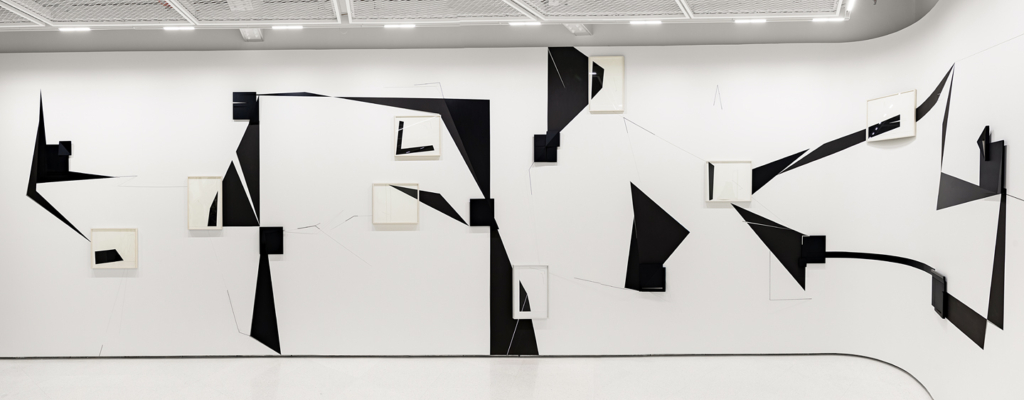
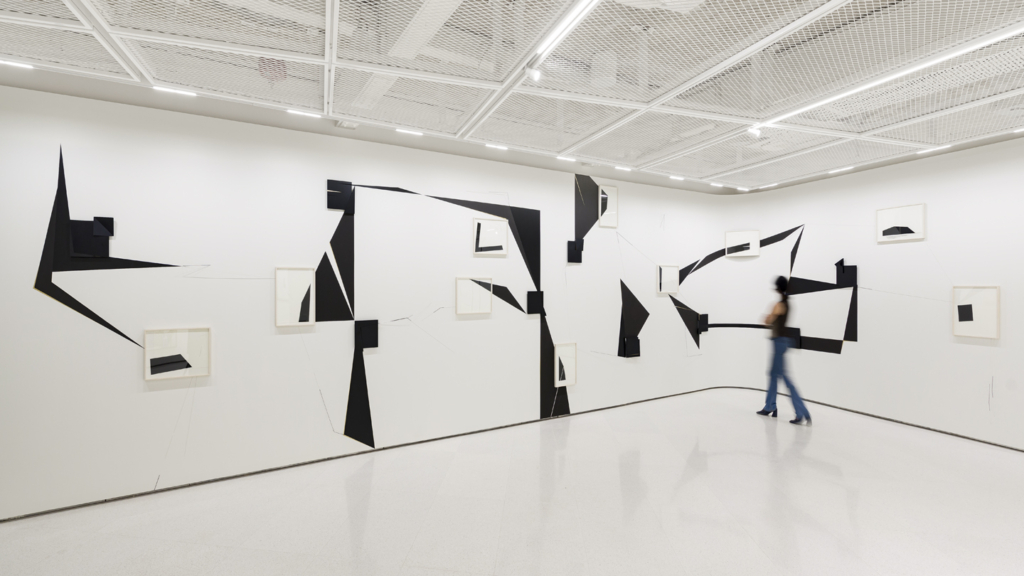
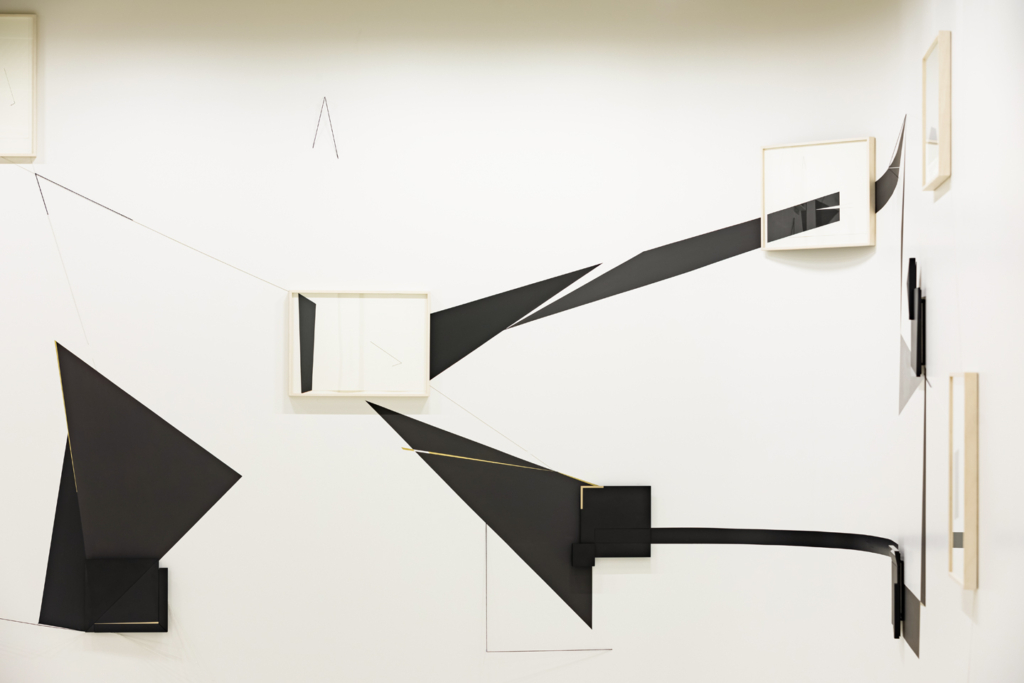
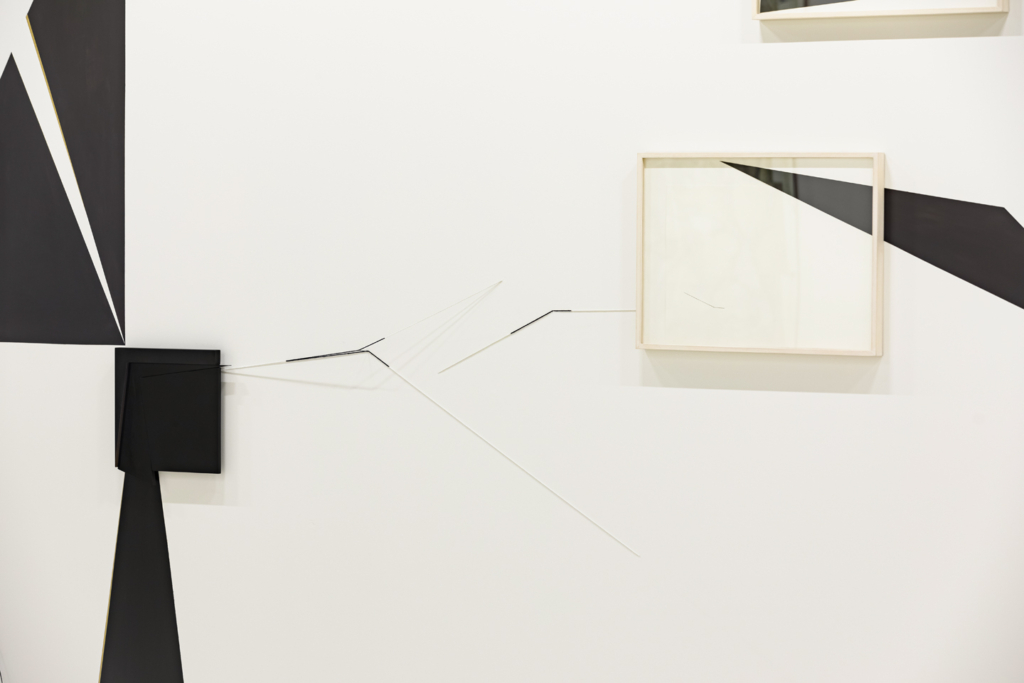
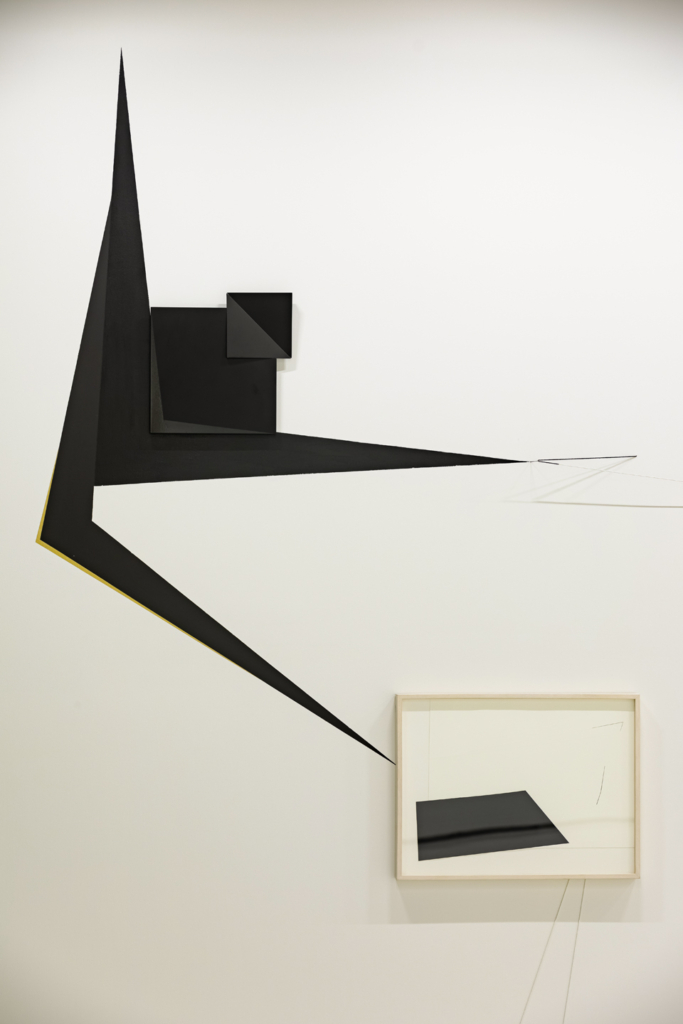
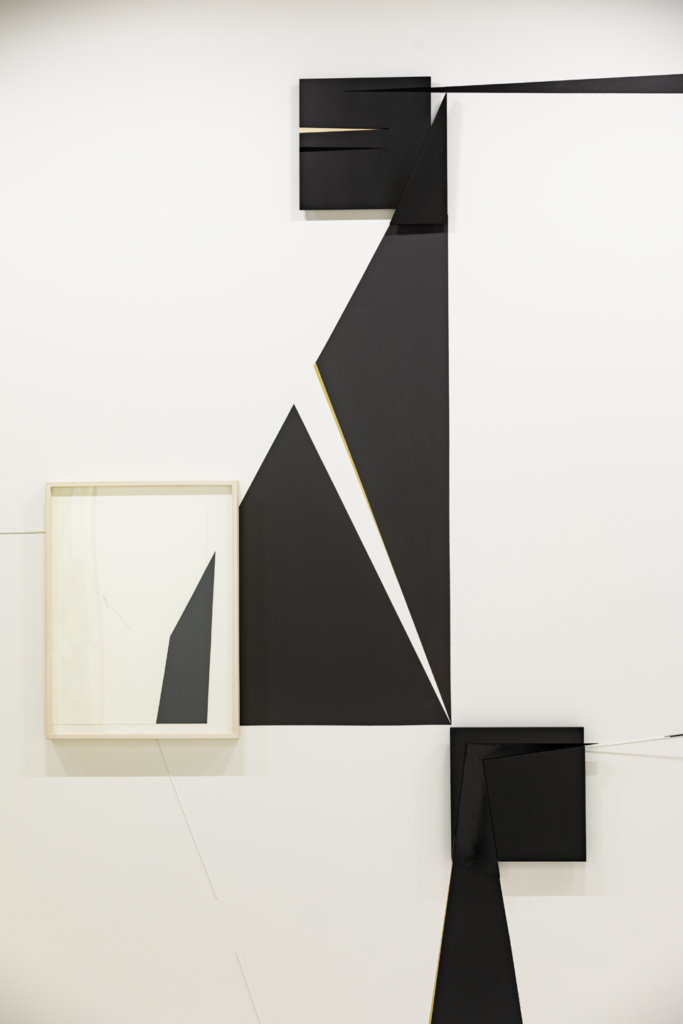
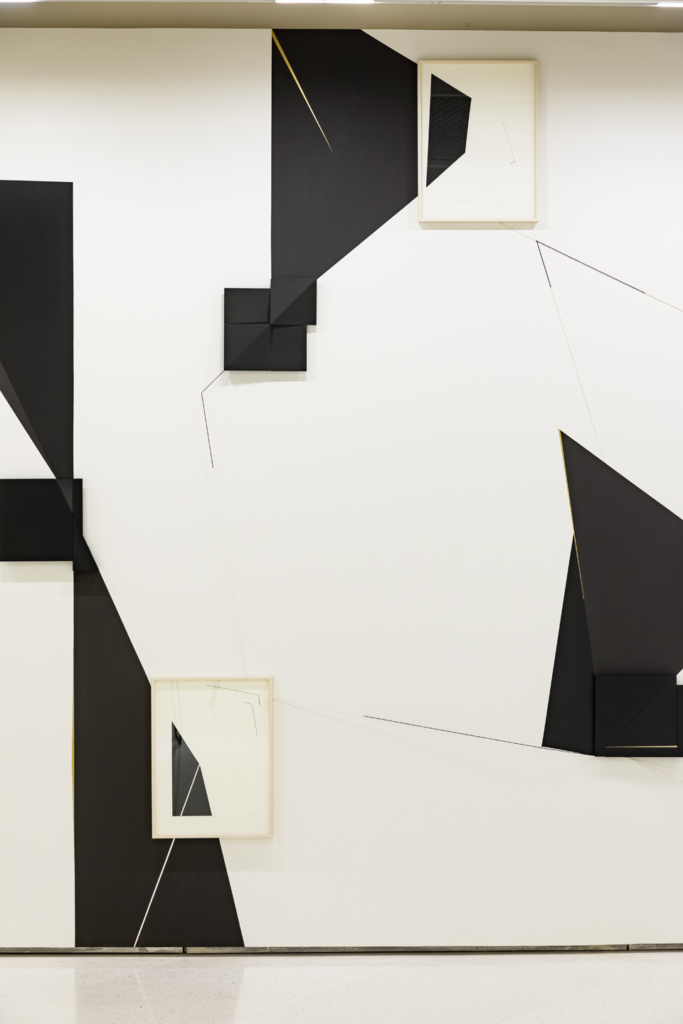
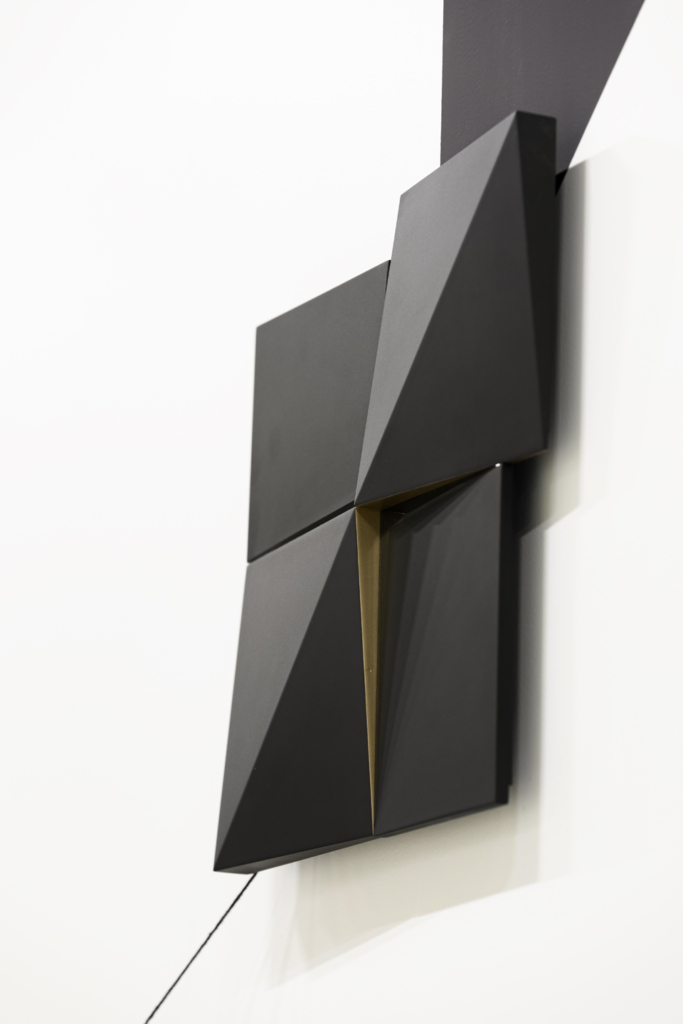
Spatial Morphology #185 (Suite of 10 Framed Drawings), Drawing Sculpture: Form, Thread, Needles, Nails, Permanent Marker and Matte Black, Gloss Black & Gold Paint on the Wall
This site-specific work is part of a group show titled ‘Splinter Puncture Sliver Spall’ that was curated by Phalguni Guliani, supported by Nature Morte and exhibited at TRI Art & Culture. TRI Art & Culture is a multidisciplinary, not-for-profit art and culture center located in Kolkata, West Bengal, and situated within a unique triangular heritage building, thereby giving it its name ‘TRI.’ The group exhibition focused upon the practices negotiating space and form, exploring how puncturing or disrupting a plane can lead to new dimensions, and how acts of rupture can generate new realities.
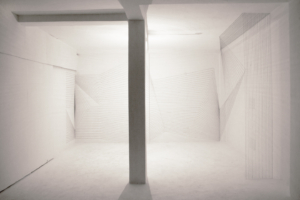
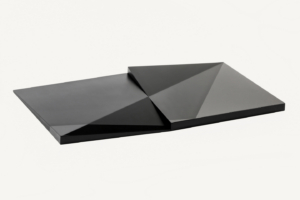
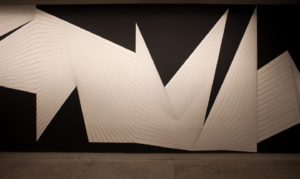
Upon my first encounter with TRI’s two-storey space, the architecture immediately began to evoke the geometry of triangles wherever my line of sight moved. This appeared in multiple aspects of the space, be it the way its staircase moved within the architecture, the flatiron-shaped rooms with their curved corners, or the triangular configuration of the site itself. The daylight too captured attention as its rays entered through the architectural openings, moving and interacting with the inner architectural space. Developed as a response to this encounter, I created a suite of ten drawings. Alongside these, I also brought along a body of my earlier sculptures from 2018, hereby introducing them into a site-specific context. There wasn’t any preconceived plan on how the composition would appear or what the process would entail, but just that I wanted to extend these drawings beyond their frames onto the walls at the site itself. Utilising the very paint of matte and gloss black with a subtle gold addition that rendered these sculptures, the interwoven play of elements was gradually expanded from the extreme left to the right side of the exhibition wall. In the drawings, fine white pastel lines began to extend outward from the frames, transforming into thread-like forms that entered the physical space.
A painted intervention extending the forms originating from both the drawings and sculptures onto the wall, bridged the gap between the two, within a single composition. In this sense, the architecture became a collaborator, especially the scale which allowed unexpected connections to amalgamate into the resultant unified composition here. Emerging as a conversation between the body and architecture, the work unfolds through a subtle continuum of parallax that remains largely imperceptible to our visual sense until the viewer slows down and becomes attentive to experience the space. Further, there also exists an act of weaving here that encompasses both a specialised physical process and a conceptual method for connecting the disparate elements that are produced at different moments in time, into a single visual network. A unique process that was previously also present in my ‘Extending the Line’ project as well.
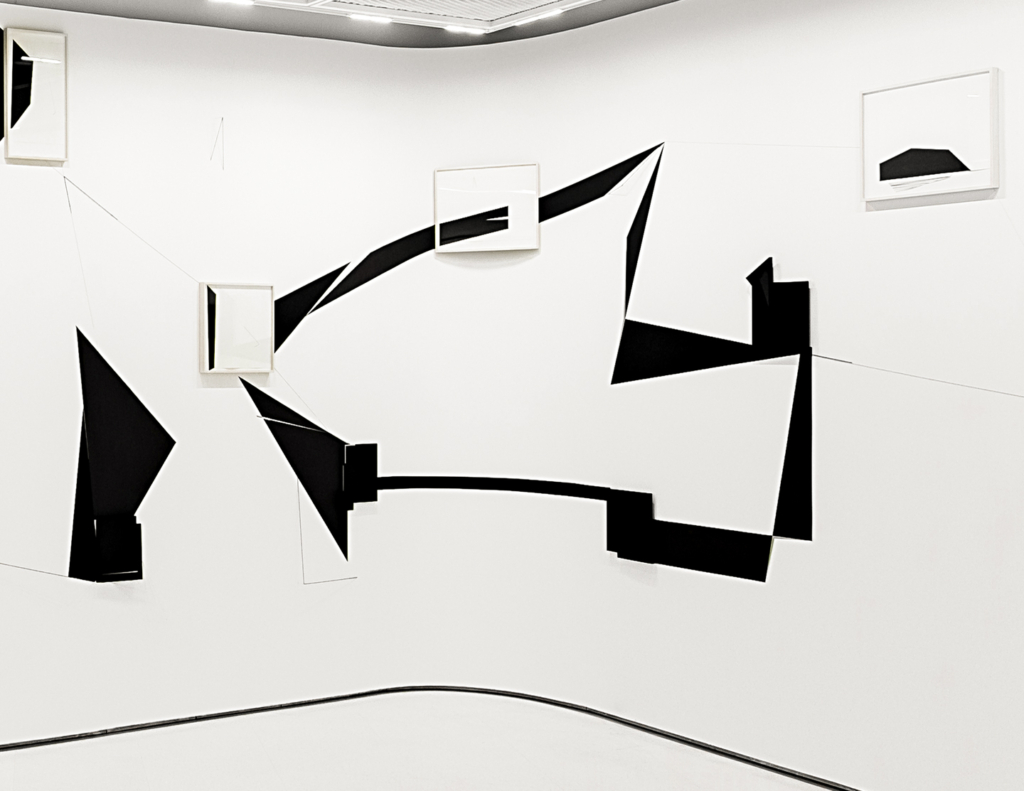
Moreover, as I was approaching the curved corner of the triangular exhibition space, the building’s architecture presented another opportunity. Whereas a conventional perpendicular corner would have created a point of restriction or closure, the unique curved geometry of TRI allowed the forms to continue flowing across the engaged site. But at the same time, I was also gradually running out of the available visual prompts, drawings and sculptural works that had been guiding the composition, thereby seeming to be approaching its natural endpoint.
Amidst this process, however, as I briefly stepped back to look at the work around the rounded corners of the architectural site, the circular movement of composition unexpectedly brought to my mind Henri Matisse’s famous painting, ‘The Dance’ (1910), and its interconnected figures holding hands in a continuous movement. I observed how a certain sense of circularity emerged organically from the interaction between the work and the architecture. The curved corner enabled the visual language to flow rather than stop, allowing the viewer’s movement through the space to become an active part of the composition itself. The work ultimately became a performance of movement within the architecture, where the composition is structured by an intuitive visual language, with its final form emerging through an ongoing dialogue with the space itself.
Grounded in the principle of parallax, and created through an intra-network of metal sculptures, drawings on paper, and the existing architectural elements of the site, the interaction collectively stages a spatial choreography, where each element is connected through strings, and forms emerge to extend outwards from their bodies and into the space beyond. Further, the work requires the viewer to actively move along its extensions, thereby discovering the revealed subtle shifts, undulations, and deception of black.
Image Courtesy: Nature Morte I TRI Art and Culture