Let’s Proceed in Parts, a solo presentation at Instituto Cervantes, Delhi, presented by Exhibit 320 in 2016. Here the works emerged from my interest in finding poetry within architectural space. The exhibition took its conceptual departure from the ideas of time, movement, and rupture in the poetry of Nicaraguan poet Rubén Darío, especially his poem titled “Vamos Por Partes (or Let’s Proceed in Parts)” (Abrojos, 1887) and a critical prologue on him depicted in Mexican writer Octavio Paz’s famous volume “Selected Poems by Ruben Dario” (1965). Stemming from these prompts, the exhibition acts as a means towards creating a space accentuating the oscillation of the eternal trap of time, which manifests the amalgamation of cosmic diversity.
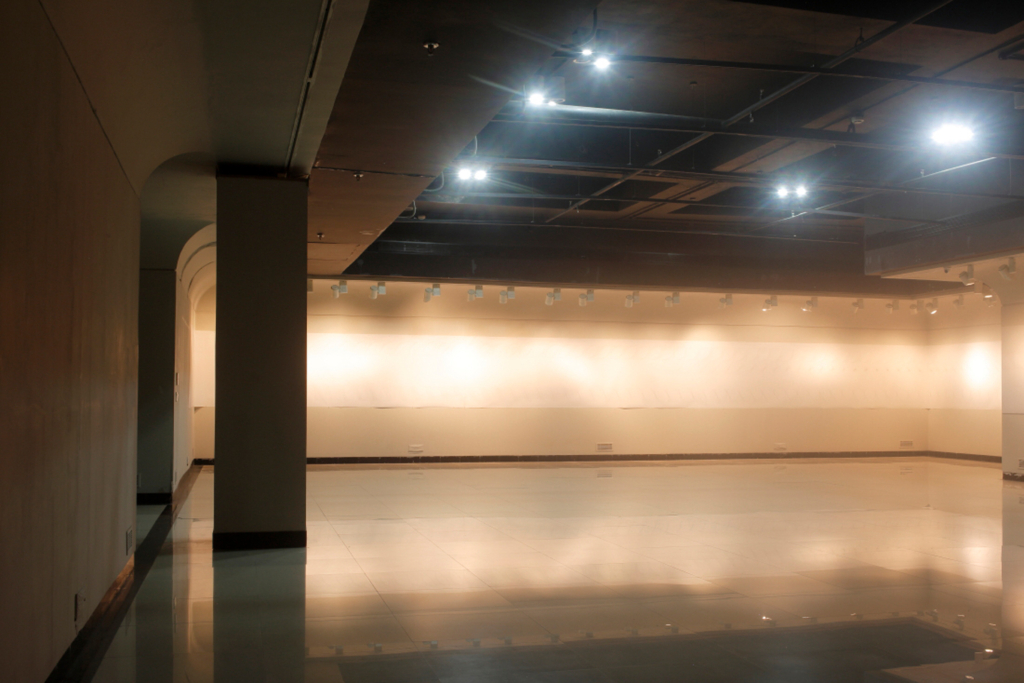
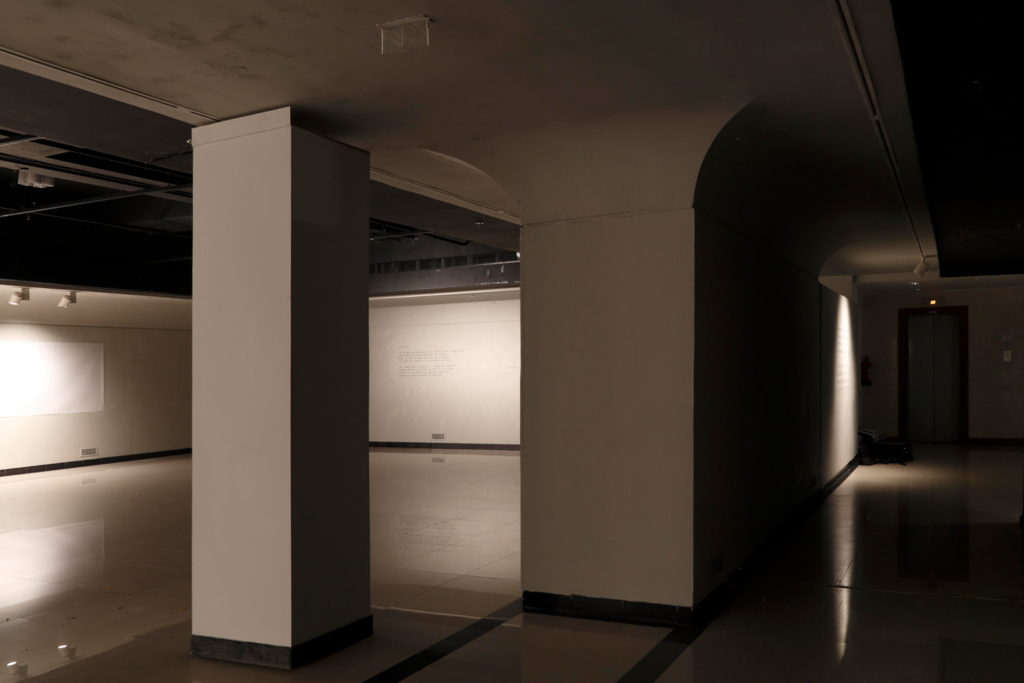
The exhibition was situated within a large spacious hall at the basement level of its building. The exhibition space was divided into multiple parts, where upon entering, the viewer first encountered in front, a total of two poems by Ruben Dario printed and flanked onto two separate, mobile walls. One depicted an excerpt from Darios’s “Vamos Por Partes (or Let’s Proceed in Parts),” while another depicted the starting passage from his short poem “Rimas X (or Rhymes X)” from 1887. There were two additional poems displayed in another space within the same exhibition, titled “In Autumn” and “Canción de otoño en primavera (or Song of Autumn in the Springtime)” from his landmark collection “Cantos de vida y esperanza (or Songs of Life and Hope)” (1905).
Site Specific Installation
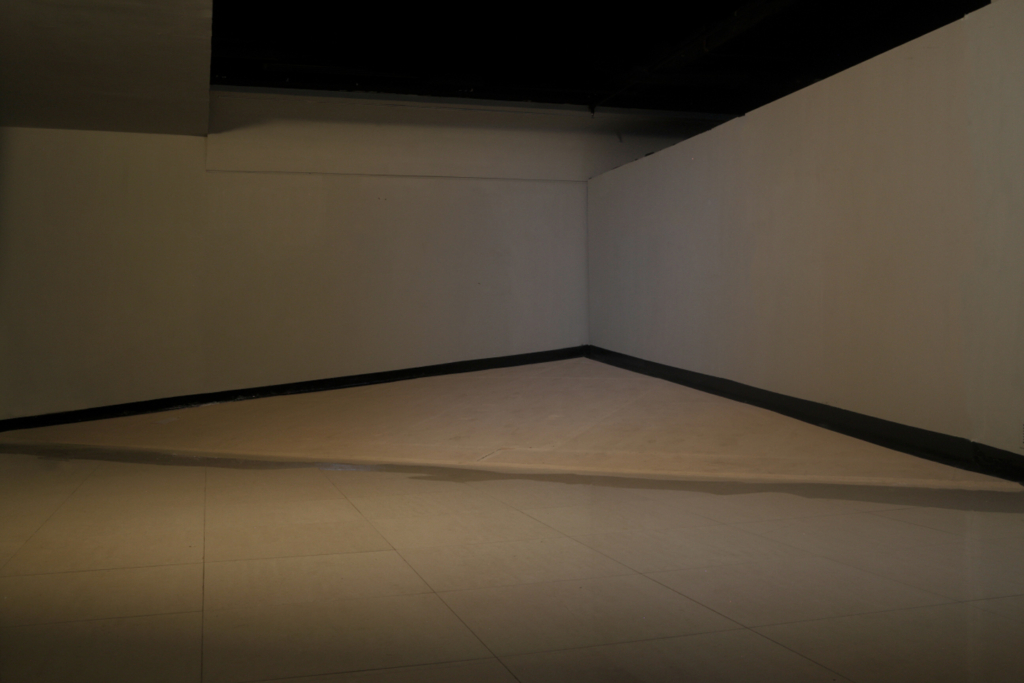
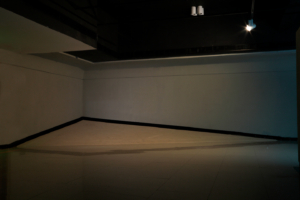
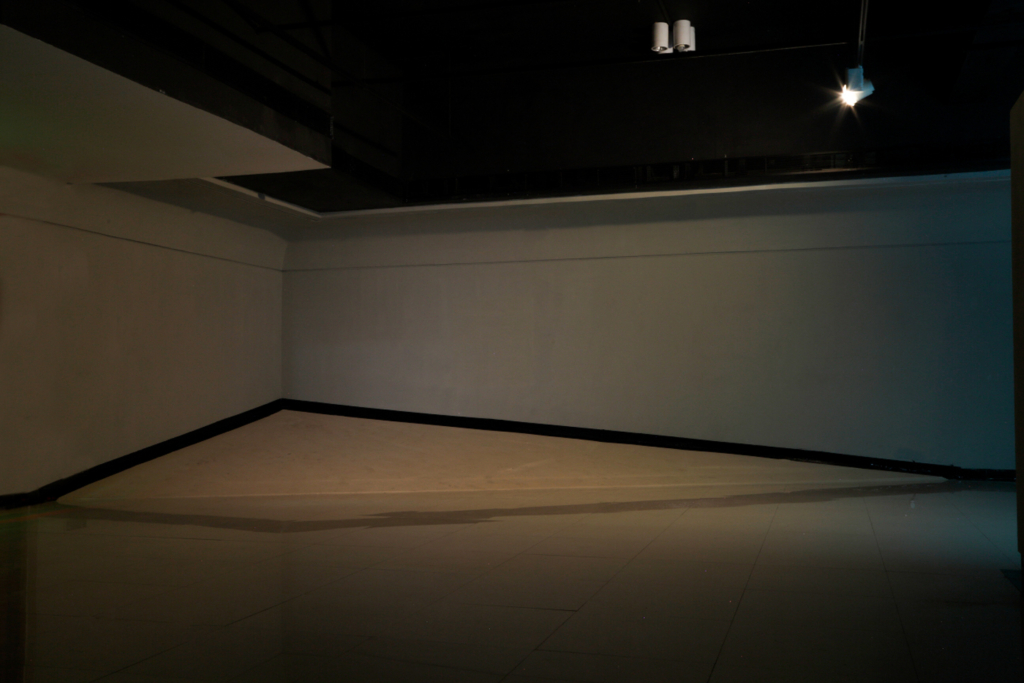
Towards the left direction, the exhibition space housed two steep triangular platforms installed in the two opposite corners of the basement hall. One of the first interventions within the space, the work germinated from a simple, unsaid but commonly followed architectural convention, where the floors are expected to be flat and walls to be straight. Wanting to rupture this very assumption, the work aimed towards subtly disrupting the subconscious knowledge as it navigates a familiar yet unexpected terrain.
The platforms gently rose from the existing floor, joining at the meeting points of adjacent walls and thereby creating an almost imperceptible slope. The intervention was deliberately matched to the color and materiality of the original floor, allowing it to remain concealed within the existing architecture and acted as the first encounter of distortion through visual senses.
We often move through the familiar spaces through a certain bodily expectation and awareness. For instance, a flat floor requires no conscious adjustment due to absence of any additional pressure onto the body, but a sloped terrain immediately demands a change in balance, movement and spatial awareness to acclimate to the subsequent alteration. Masked within the space, the work deliberately causes a certain sense of unease and disorientation. Thereby forcing the viewer’s body to recaliberate upon encountering the unexpected, and subsequently causing a sensory disruption of the body and distortion of the space through an experience of perceptual displacement.
To read further: https://parulguptastudio.com/work/lets-proceed-in-parts-floor-work/
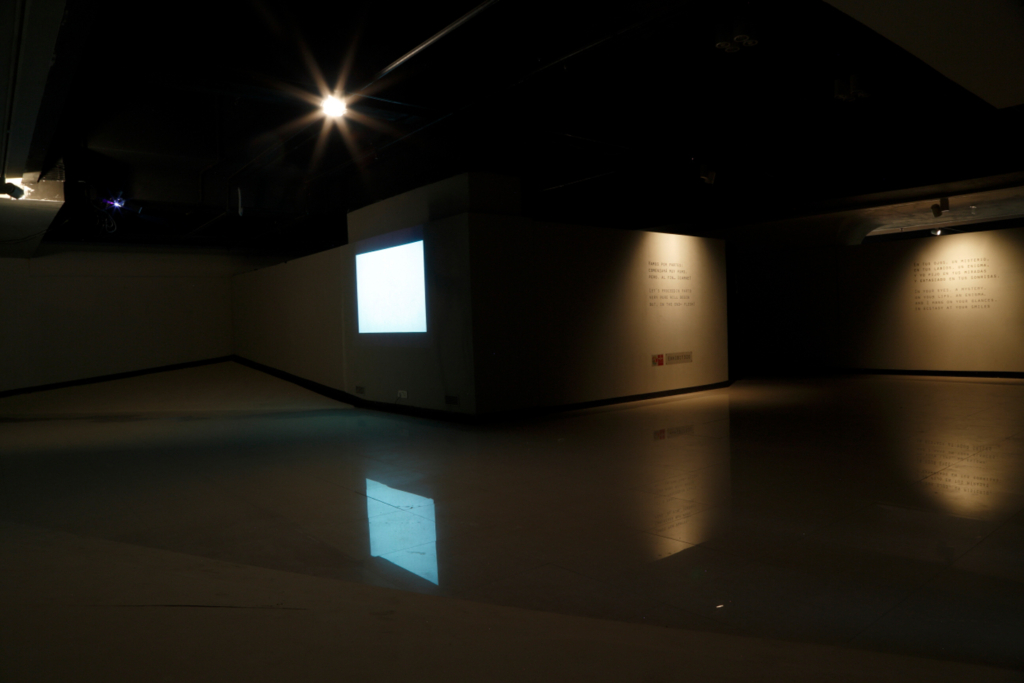
Hairfall Video Projected on the Wall
Hairfall
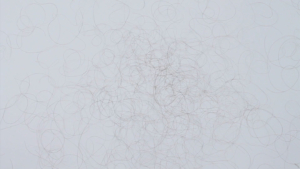
In between the two site-specific floor installations laid a wall that was projected with a video work, titled ‘Hairfall’ (2011). Running for a length of 5 minutes 47 seconds, the work captured the simple act of fallen hair accumulating on a sheet of paper. The seemingly incidental marks produced by the hair resembled abstract scribbles, appearing, shifting and disappearing without deliberate control.
The work emerged during my stay in a residential suite while studying at the Nottingham Trent University in 2011, where an everyday preoccupation with fallen hair and cleanliness led to the discovery of this drawing done by hair. With an overhead view, one day, I captured this act of naturally occurring scribbles, irregularly delineating atop the surface of paper. The documentation of these arrangements transformed this incidental act into a visual enquiry and study of the ‘line’. Unlike a drawn line, whose direction, length and position can be consciously controlled, the movement of a hair strand is governed by its own physical properties, where its fall determines where each stroke comes to rest. Hairfall consequently became an early point of departure for a larger inquiry into what a line is, where does a line begin, who or what determines its trajectory, and whether a linear drawing necessarily requires an intentional act of mark making. This encounter with an uncontrolled, organic line continued to greatly inform my subsequent explorations into linearity, movement, space and perception.
To read further: https://parulguptastudio.com/work/hairfall-video/
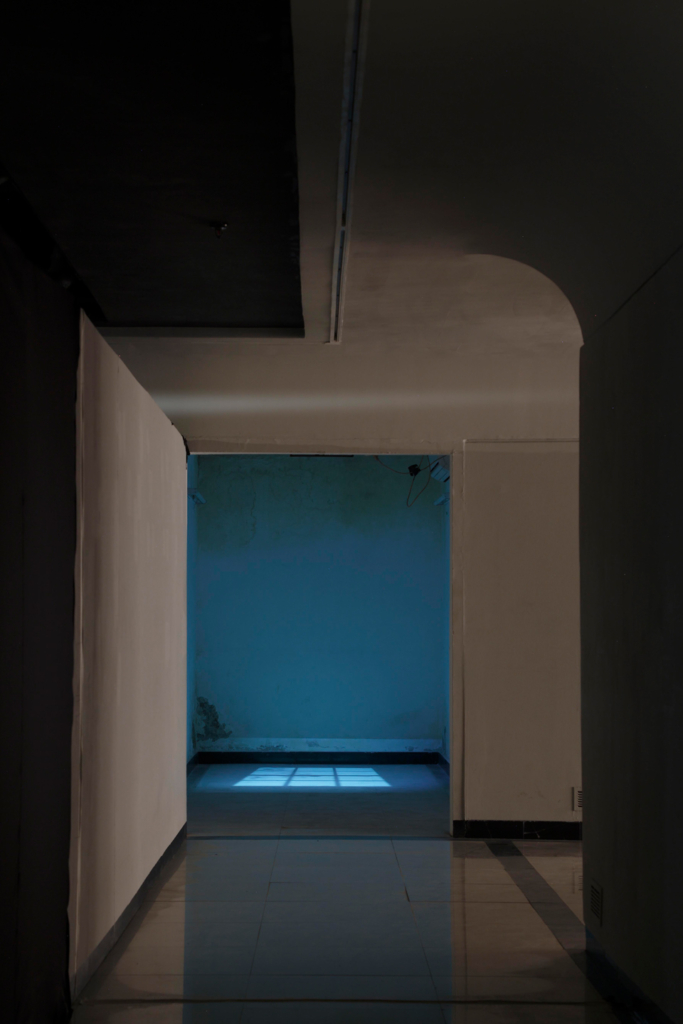
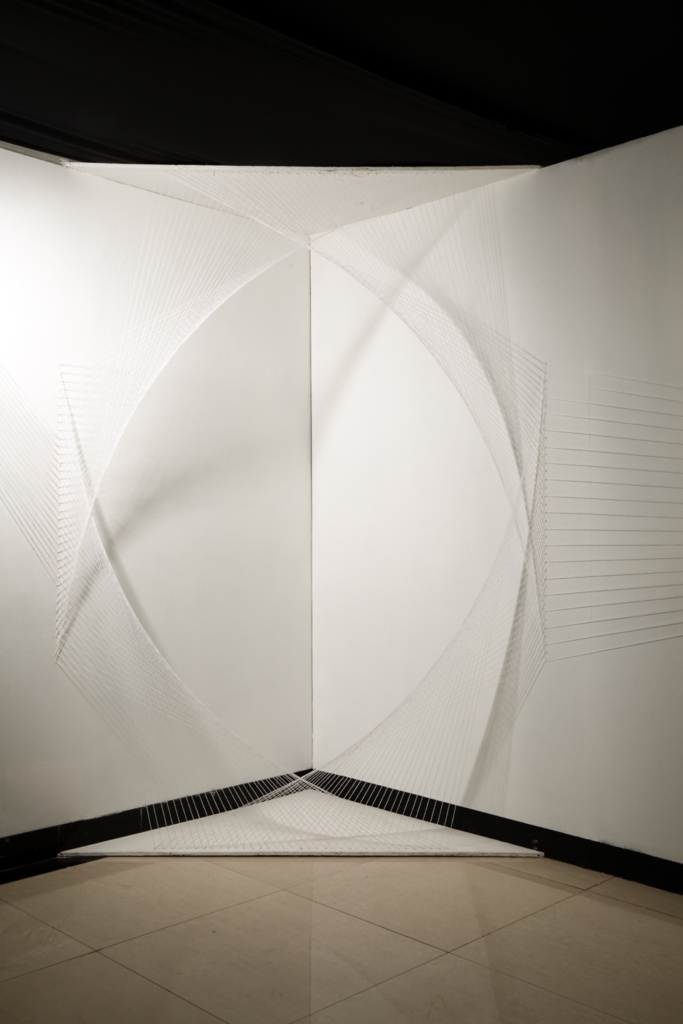
Towards the right direction, an opening was situated in between the two temporary walls with poems that led to a narrow corridor. The corridor housed the entry to four different works within the exhibition. On the left side to this corridor was a temporary space exhibiting a thread-based linear drawing installation titled as ‘Drawing in Space.’
Drawing in Space
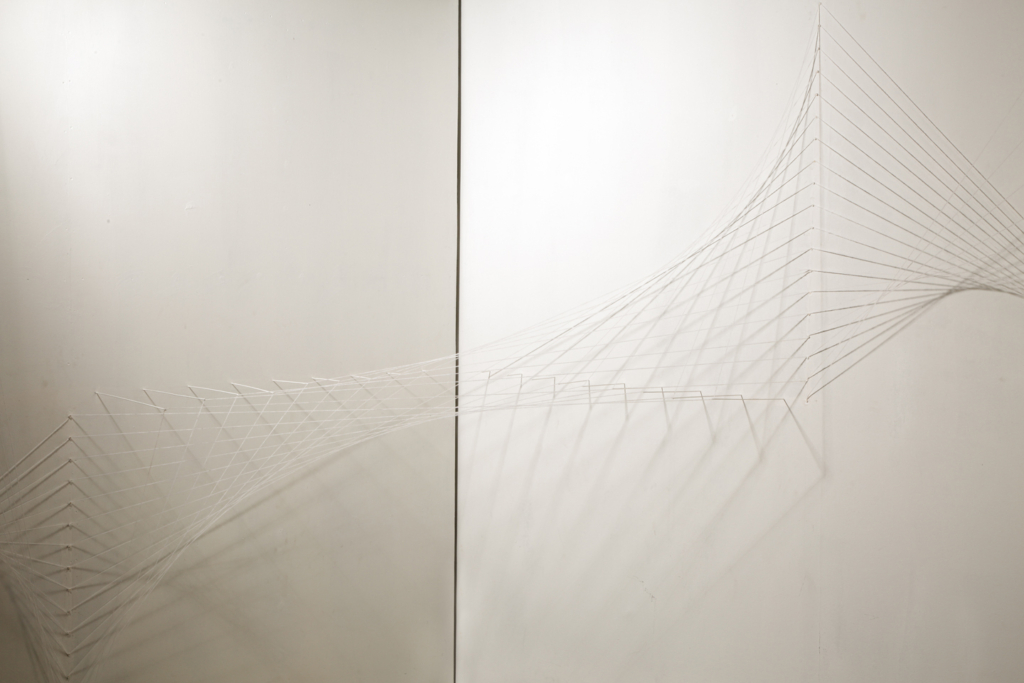
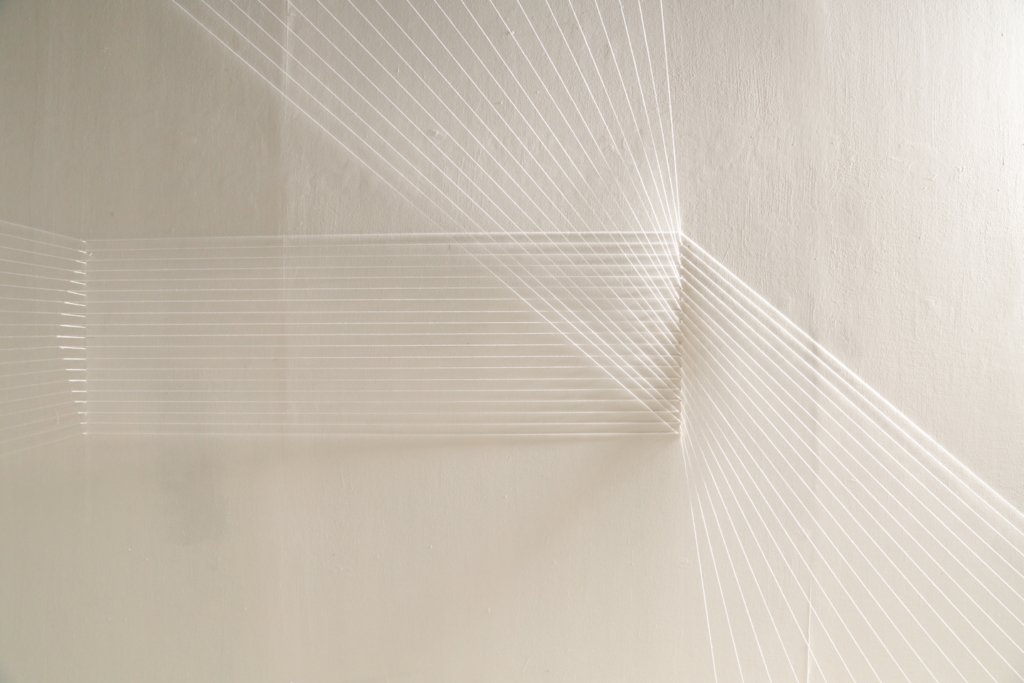
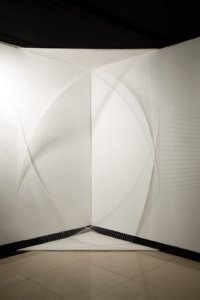
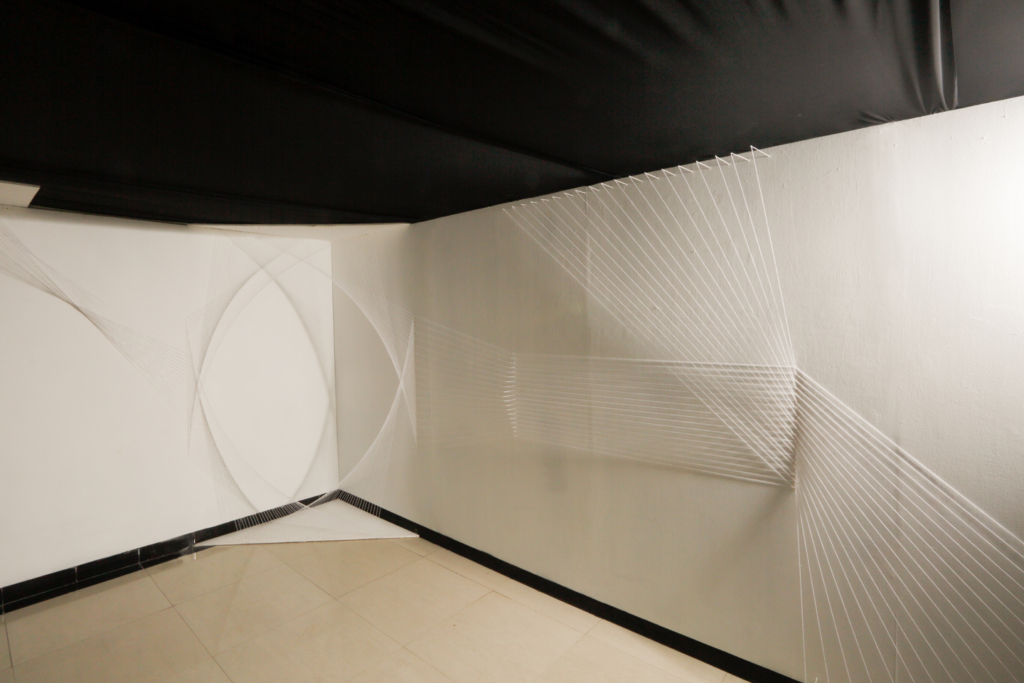
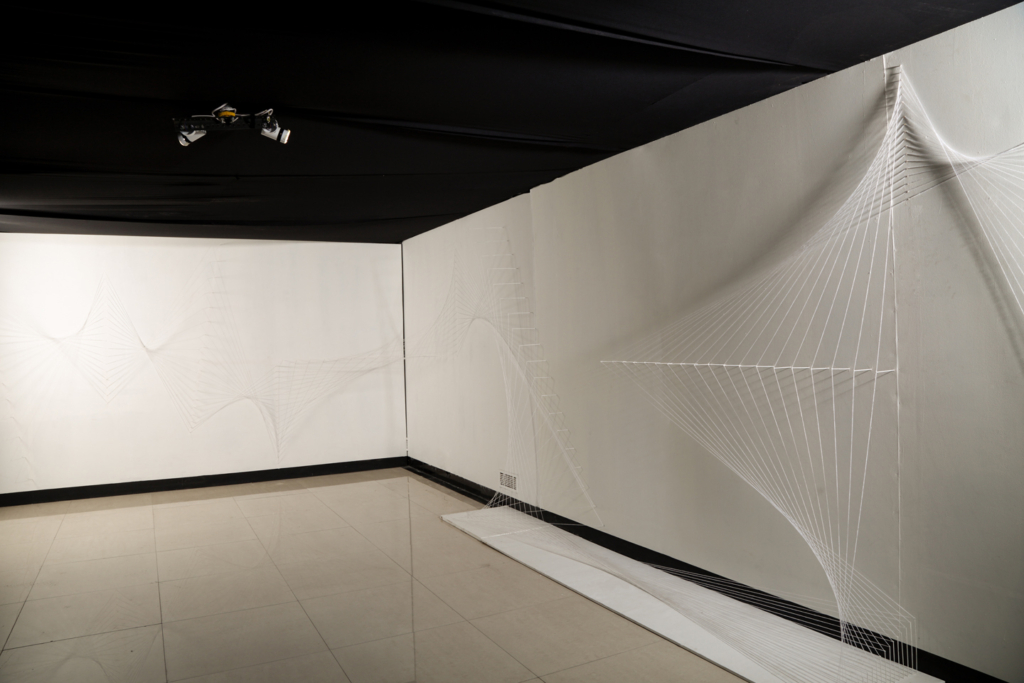
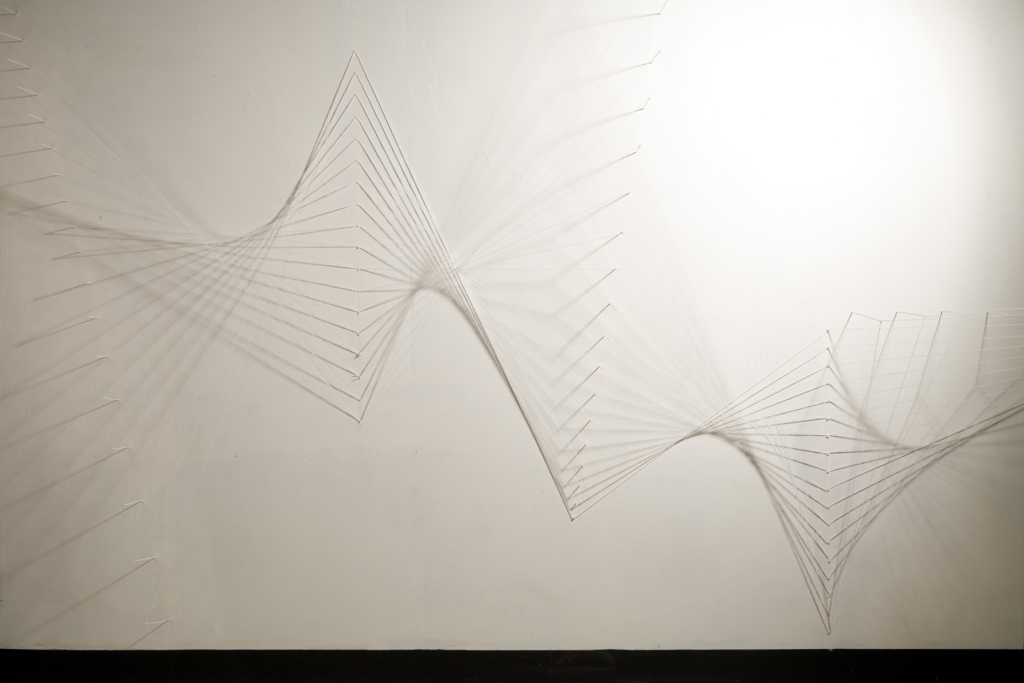
An immersive, three-dimensional drawing created using thread, nails, and light, this site-specific installation was an extension to my previous Drawing in Space (I) from the Making Space project. The earlier exhibition space at Instituto Cervantes consisted of one large basement hall with its huge walls, and therefore a temporary room with four flat walls and a ceiling of limited height covered with black fabric was created for the exhibition. Unlike the previous site, whose columns, structural elements, and spatial irregularities offered distinct architectural character and conditions to respond to, the space here appeared slightly bland and devoid of the same. Therefore, rather than primarily utilising architectural space as an element of focus, the idea of working with shadows came into forefront as a way of experiencing the spatial expansion of the drawing beyond its physical boundaries and holding the space together through light and movement. The work depicted white yarns protruding out of the walls through needles placed into the walls, floors and ceiling creating a three-dimensional linear composition within the architectural space.
Two light sources were mounted upon a kinetic mechanism at the centre of the space’s ceiling, moving at a very slow pace in clockwise and anticlockwise directions. As the lights moved, their shadows travelled continuously across the four walls and the floor. At the same time, the white thread placed against the white walls became visually absorbed into the space, appearing almost like another layer of shadow. Playing with the inherent material, the white thread was deliberately used, allowing the material to merge with the wall while retaining the linearity of the drawing through its shadows. Due to such interplay of light and shadow, constant movement, and architectural space, it led to a visual struggle within viewers to be able to keep their eyes static within this dynamic, shifting environment. Furthermore, this phenomenon also elicited contrasting bodily responses within the audience. While for some viewers, the continuous shifting of shadows created a sense of disorientation and motion sickness. For others, the same experience became calming and meditative. The work therefore extended beyond the visual experience of the drawing into a physical, spatial and perceptual encounter within this dynamic site-specific intervention.
To read further: https://parulguptastudio.com/work/drawing-in-space-lets-proceed-in-parts/
Light Projection
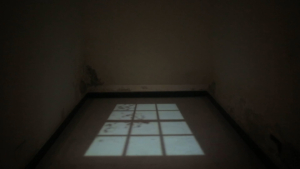
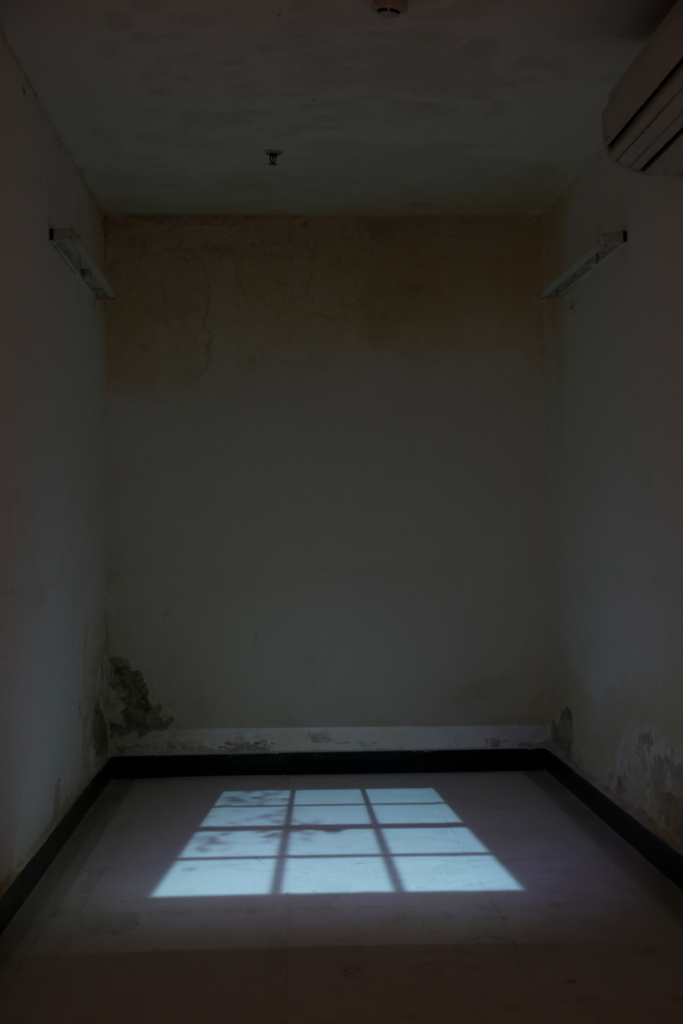
Further down the corridor, a video piece was projected onto the floor of a dark and dingy room within the basement. The light projection showed a shadowy image of light passing through the pane of a glass window. Evoking a familiar experience of nocturnal windowscape, the video also projected the form of a tree fluttering softly in the breeze. The exhibition room, however, had no windows or access to natural light. The emergent visual information established an architectural possibility that the physical space simultaneously contradicted, therefore leading to a certain sense of disorientation and amazement within the viewer.
The intervention relied upon the body’s subconscious knowledge and perceived understanding of an architectural space. Upon encountering the light entering through an opening is so deeply embedded within our everyday experience that the projected illumination initially suggests the presence of a window, even though no such opening exists within the room.
As the viewer begins to recognise this fact, the certainty of the space is disrupted and the body becomes conscious of its own conditioned assumptions about how architecture should function. This subtle shift thereby produced a rupture in the otherwise familiar reading of an architectural space, as a part of this deliberate intervention that deployed the use of an interplay of light and shadow. The work therefore unfolds not through the projected visual image, but rather through this very moment of discrepancy encountered between what the viewer perceives, what the body expects, and what the space contains.
To read further: https://parulguptastudio.com/work/light-projection/
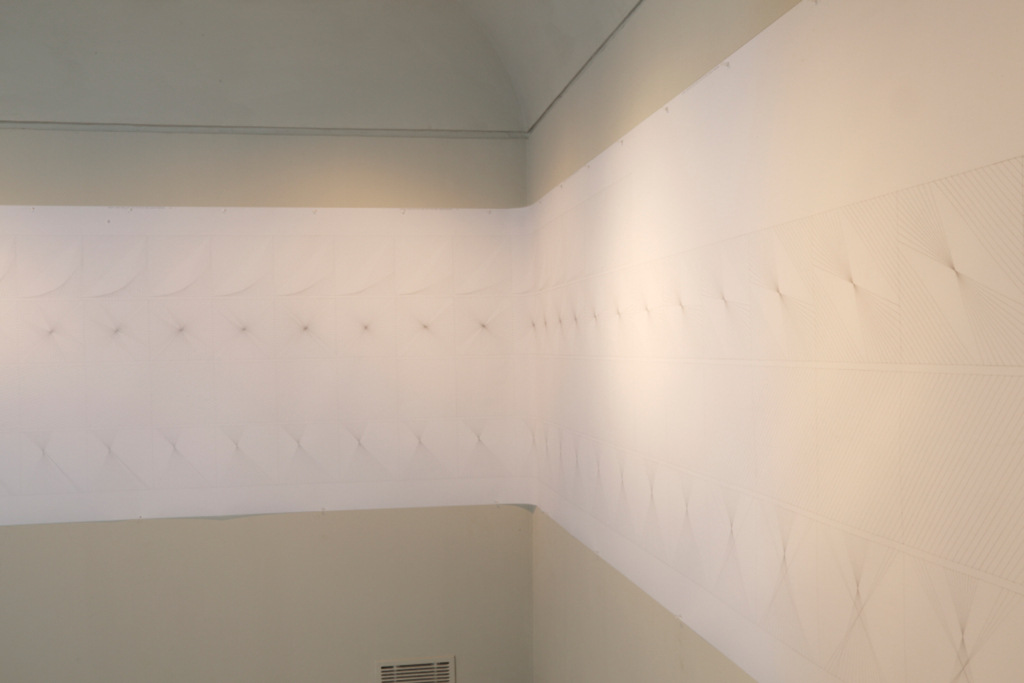
Notes on Movement- Linear Drawing 1
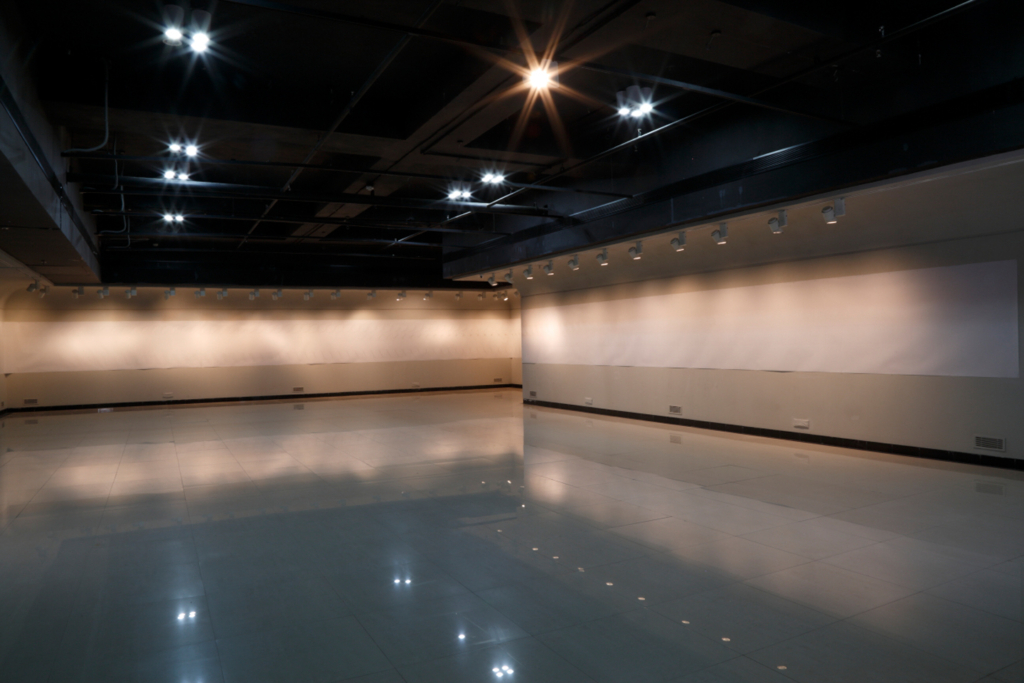
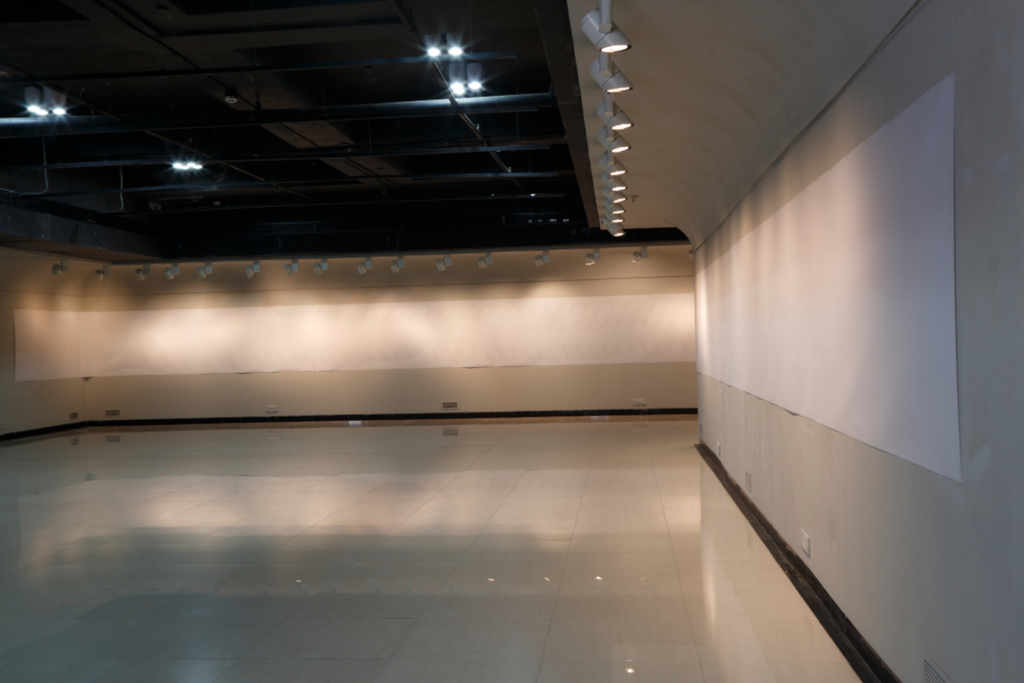
On the right side of the corridor, another space unfolded through two distinct works, displaying a hundred feet long drawing on a paper roll along its walls and a false wooden column moving across the room at an extremely slow pace. The same space also included two more poems by the poet Ruben Dario inscribed upon two separate movable walls.
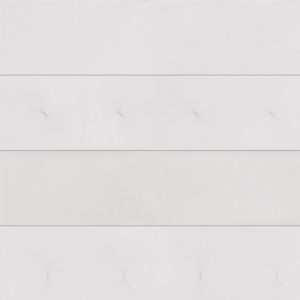
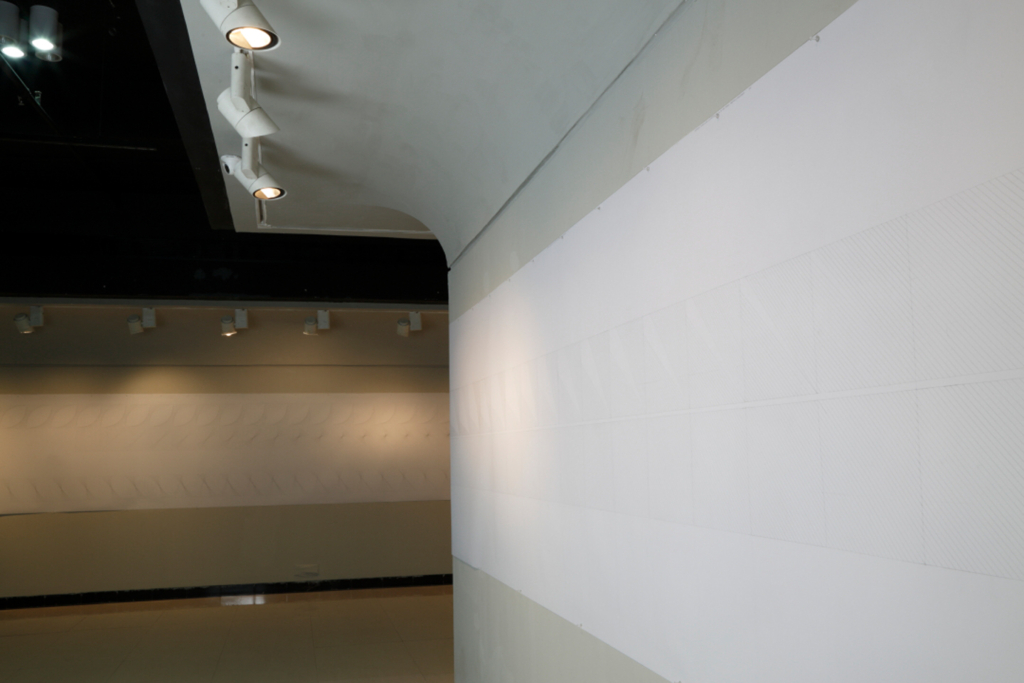
Titled as ‘Notes on Movement: Linear Drawing – I’, the former was originally a large-scale linear drawing executed with graphite onto a white, continuous fax paper scroll. Whereas the exhibition copy was drawn on a mylar roll. Extending to an approximate of hundred feet in length, the drawing was comprised of four parts and displayed in an uninterrupted manner along the four unequal walls of the large architectural space.
Rather than presenting a static image, the work explored drawing as an index of duration. Beginning with a base composition in a horizontal field, the drawing gradually rotates frame by frame, where three distinct frames- right angle, vertical, and left angle become the starting frame for the other three respective drawings. Pivoting from the original frame, each of the three drawings follows its own trajectory before eventually returning to the same frame from which it initially began, creating a series of self-contained yet continuously mutating loops. Situated within the parallelly running frames of 21 x 21 centimetres, it appears as if each line went on its own separate journey within each subsequent section.
The work encompassed a frame-by-frame animated movement within, which was not immediately visible from a stationary position. Instead, the shifting relationship between successive frames became perceptible only as the viewer physically moved past some frames, walking forward and backwards to register a sense of what was unfolding. This movement alongside the continual scroll activated gradual visual transitions between its linear states, thereby producing a contradicting effect between stillness and movement, an enquiry that the work primarily delves into. Rather than a conventional relationship where a video composition or its components are in a constant flux while the viewer remains still along with the screen, the drawing here remains materially static while the body becomes central to activate the very work that is produced through a constant act of looking. And thereby reversing the very performative gaze. Here, the body navigating through the architectural space becomes a deliberate mechanism through which the inherent movement within the drawing is subsequently revealed.
To read further: https://parulguptastudio.com/work/notes-on-movement-linear-drawing-1/
Site Specific Installation
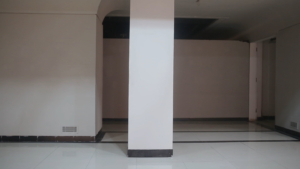
The last work executed within the same space and adjacent to the prolonged linear drawing was a site-specific intervention designed to be in a constant flux. Created as a self-moving false column disguised as naturally belonging to the existing architectural space, it was programmed to mechanically move back and forth along the axis of the room at an extremely slow pace, using a motor, wheeler and sensors. The work operated subtly within the viewer’s peripheral awareness, by making the viewer aware of something else in the space while looking at the drawing. During which, one might have noticed that the wooden column had shifted without necessarily having seen it visually move, exploring the relationship between spatial awareness and bodily perception. Making the architecture itself an active and dynamic structure, the work quietly disrupts and ruptures within viewers their inherent knowledge of a constructed space and understanding of the world around.
To read further: https://parulguptastudio.com/work/site-specific-lets-proceed-in-parts/
Let’s Proceed in Parts I Instituto Cervantes, Delhi
2016
Presented by Exhibit320
Photo Courtesy: Exhibit320