Space; Underscore is a solo project supported by Farah Khan and RED Studio in 2020. The project consists of three distinct queries that culminated into a site-specific work, an exhibition and four collaborative drawings done with the RED Studio Team.
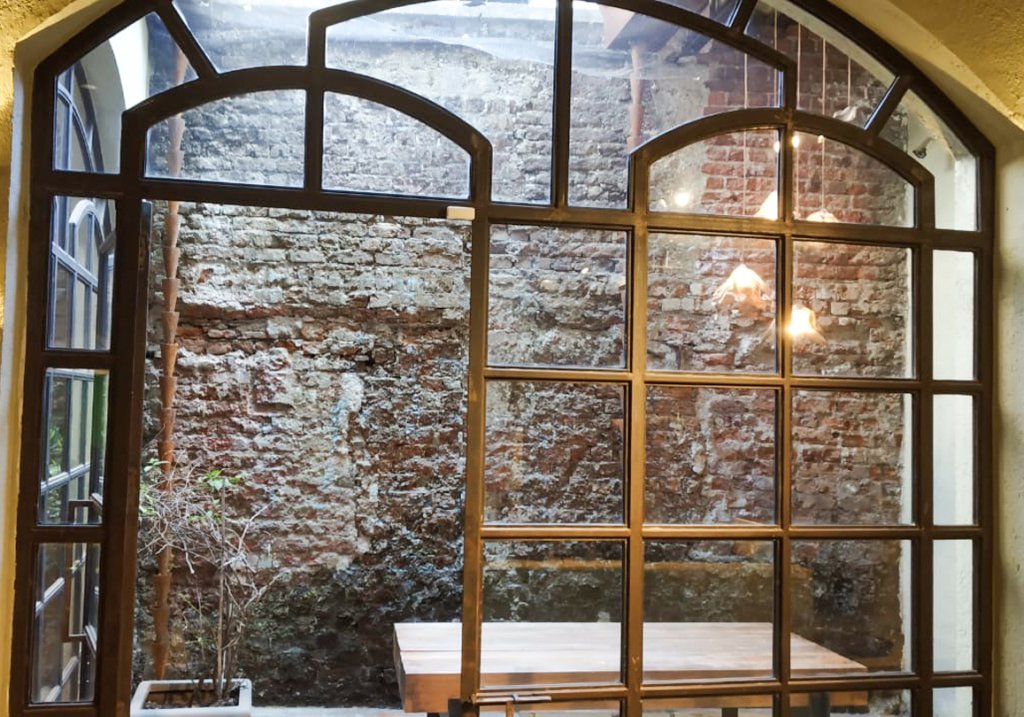
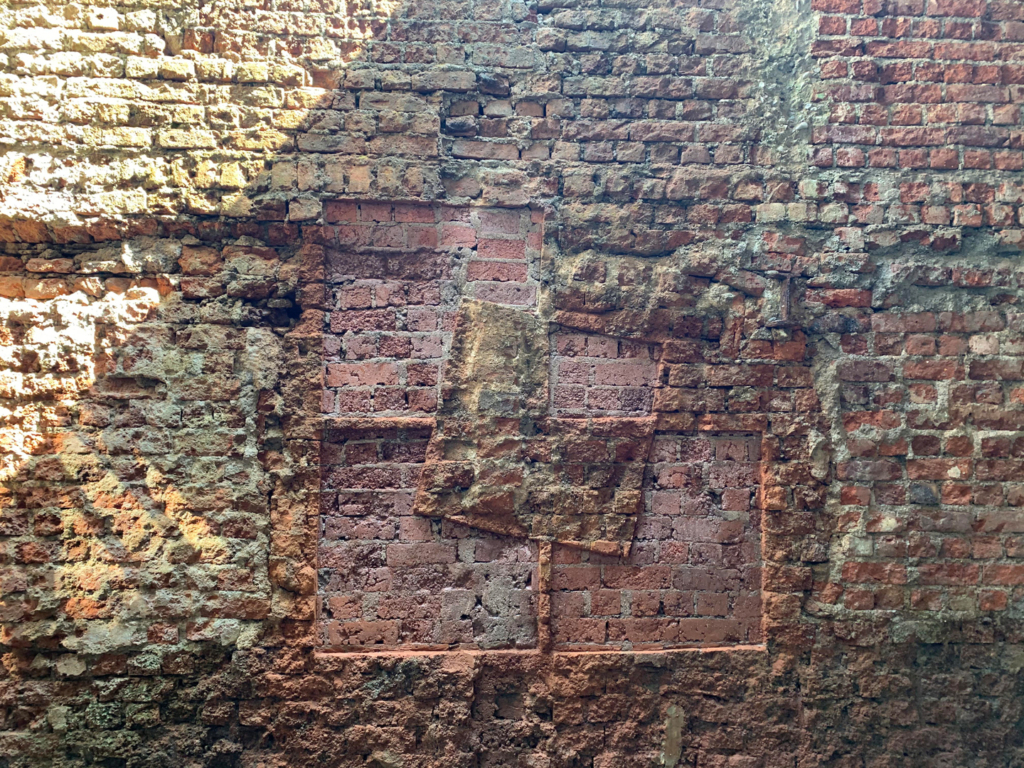
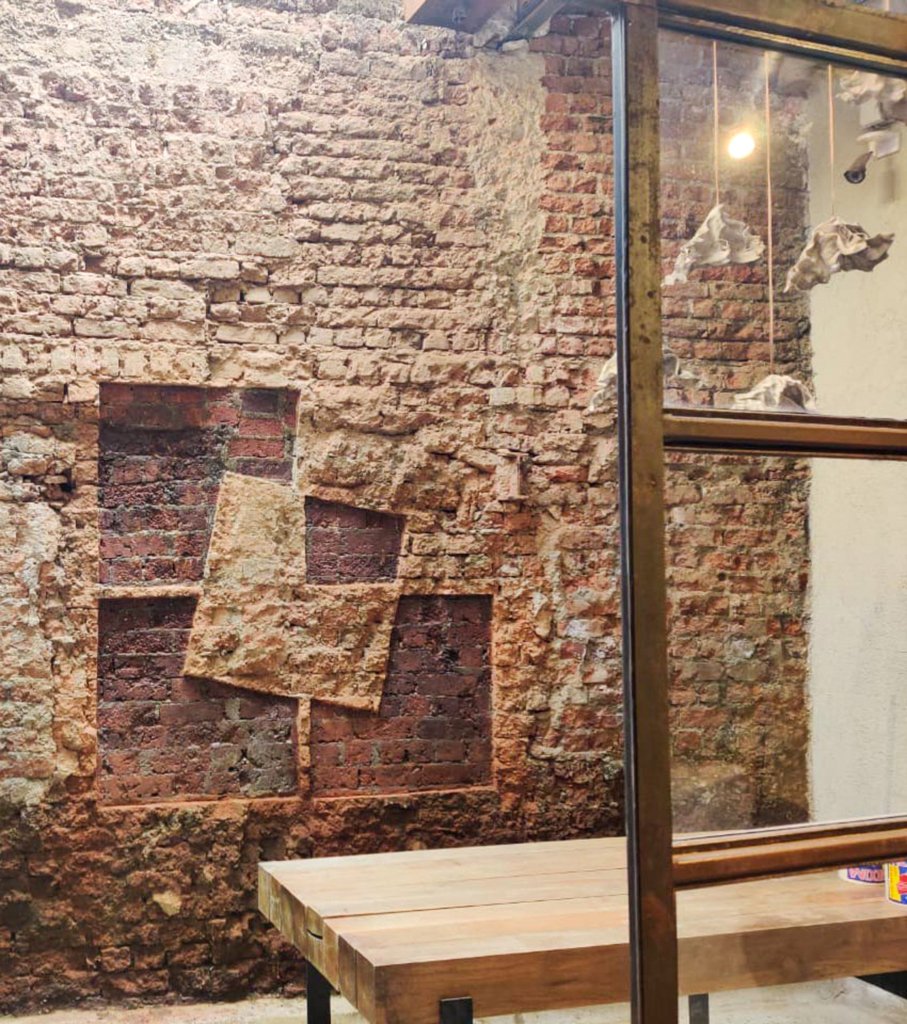
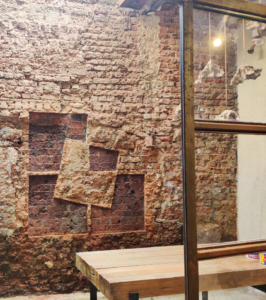
The first engagement within the project was a site-specific intervention. The architects, during renovation of the studio space, had retained an original dilapidated wall from the old structure of the studio. The brick wall runs through two offices and courtyards, the former being a place for casual hangout and recreational use. The texture of the wall and its contrast with the rest of the place gained my attention during my initial encounter with the space. It led me to question and reason the motive behind the architects’ decision to leave it in such a way.
My creative process usually does not begin with fictional narratives or imagined stories about how something might have happened or why it exists in a particular way. But in this instance, however, it emerged naturally for me. The visual began to evoke within me the atmosphere of ancient ruins and the idea of archaeological excavation, which took me back to my experience being in Mahabalipuram’s grand temple complex, Tamil Nadu in 2011. I started imagining the site as though the building had been excavated and during the process of which, this form was discovered embedded onto the wall itself. And that maybe instead of disturbing this unknown structure or remnant, they simply left it be for us to encounter.
It was almost as if a process of ‘reverse excavation’ was ongoing, constructing the whole narration backwards in a retrospective procedure of making. This imagined history became an unexpected layer within the work, using which I responded to the present architectural setup and conditions of the studio space. One of the primary facilitators being the pre-existent square grid based glass panels running throughout the whole space, responding to which I subsequently etched the brick wall in a similar visual form. This intervention continues my ongoing inquiry into architectural space, where the existing conditions of a site become an initial point of entry, gradually shaping up the work as a dynamic response to its material, visual language and geometry.
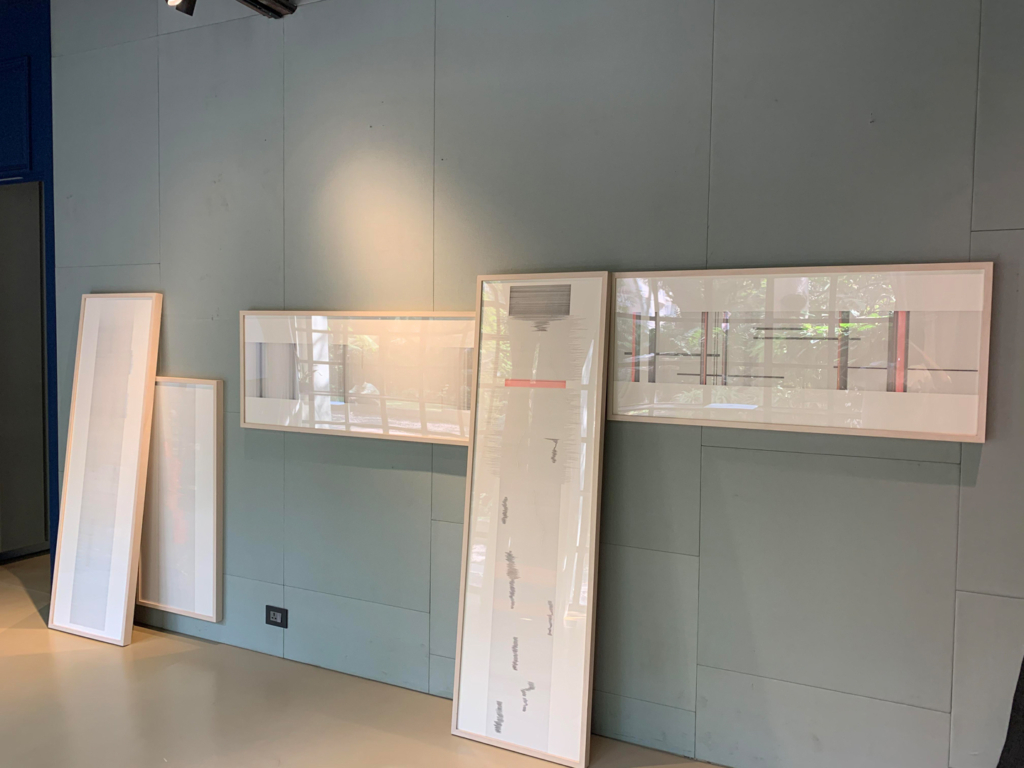
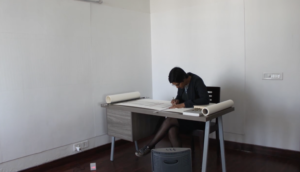
Durational Drawing #2
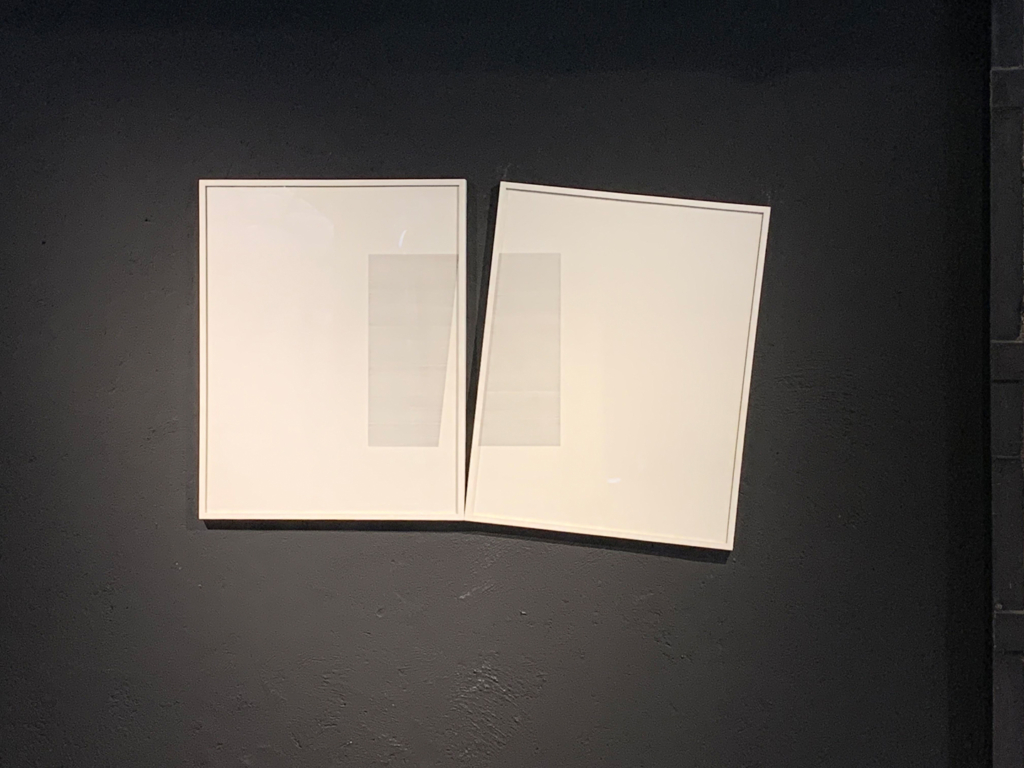
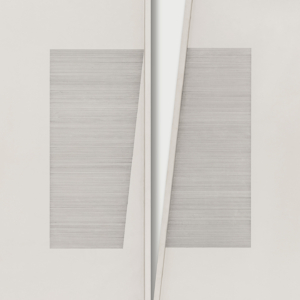
Vertical Perception
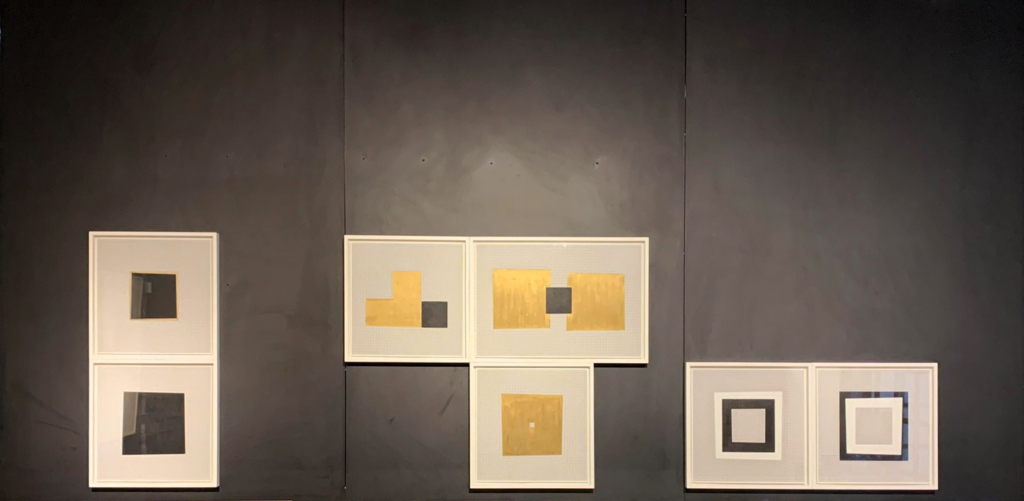
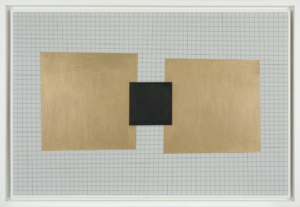
Grid 1
Further, an exhibition was also materialised within the same studio space, as a part of the ‘Space; Underscore’ project. The exhibition contained a body of multiple works from different series, such as Vertical Perception and Grid. The exhibition also included five framed sections of my Durational Drawing #2, exhibited in a spatial arrangement within the architectural space of RED studio.
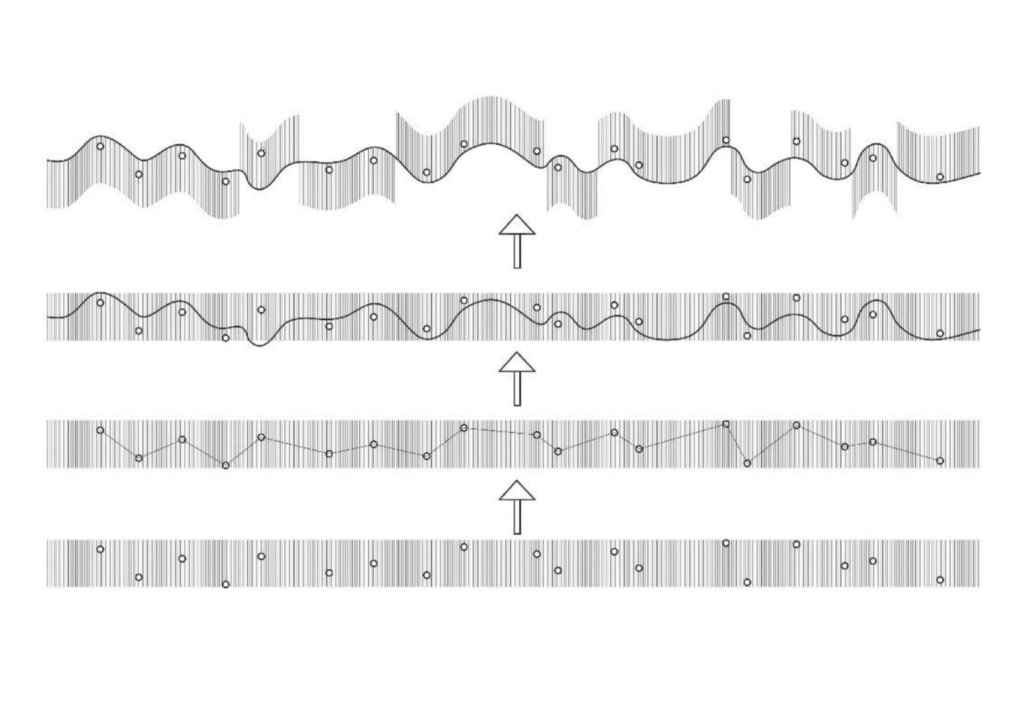
Leave your Mark
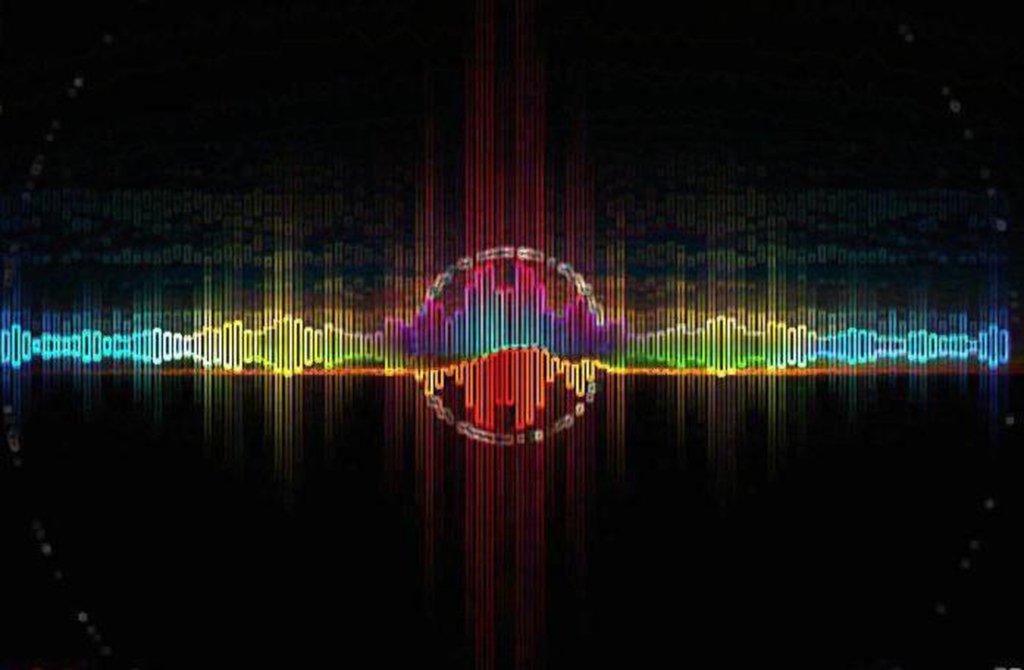
Music in Line
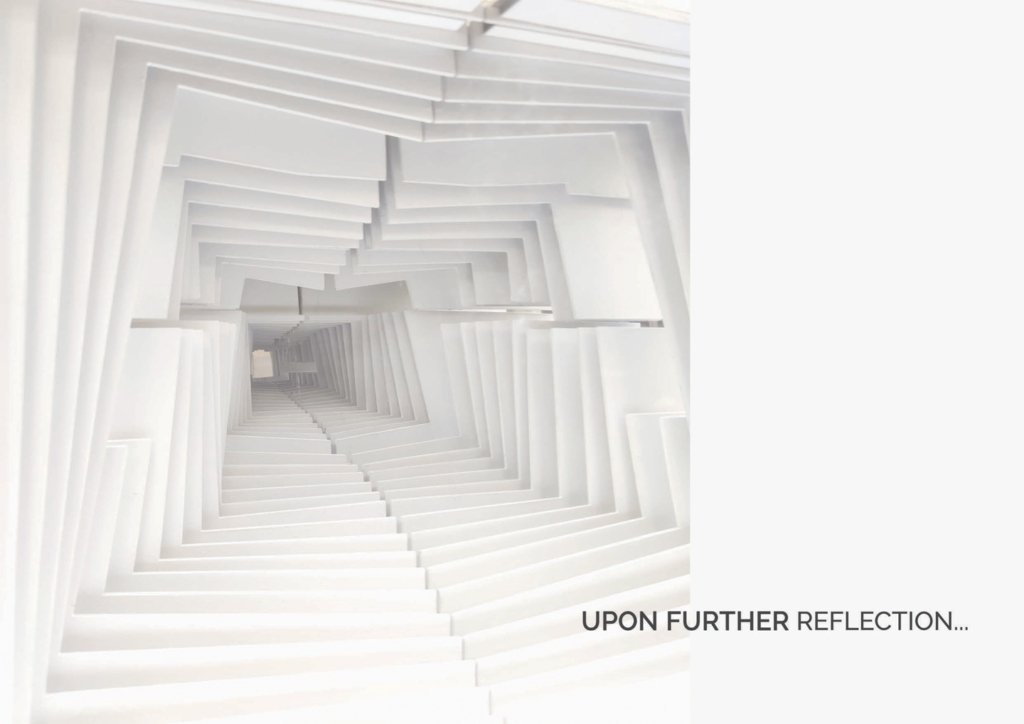
Upon Further Reflection
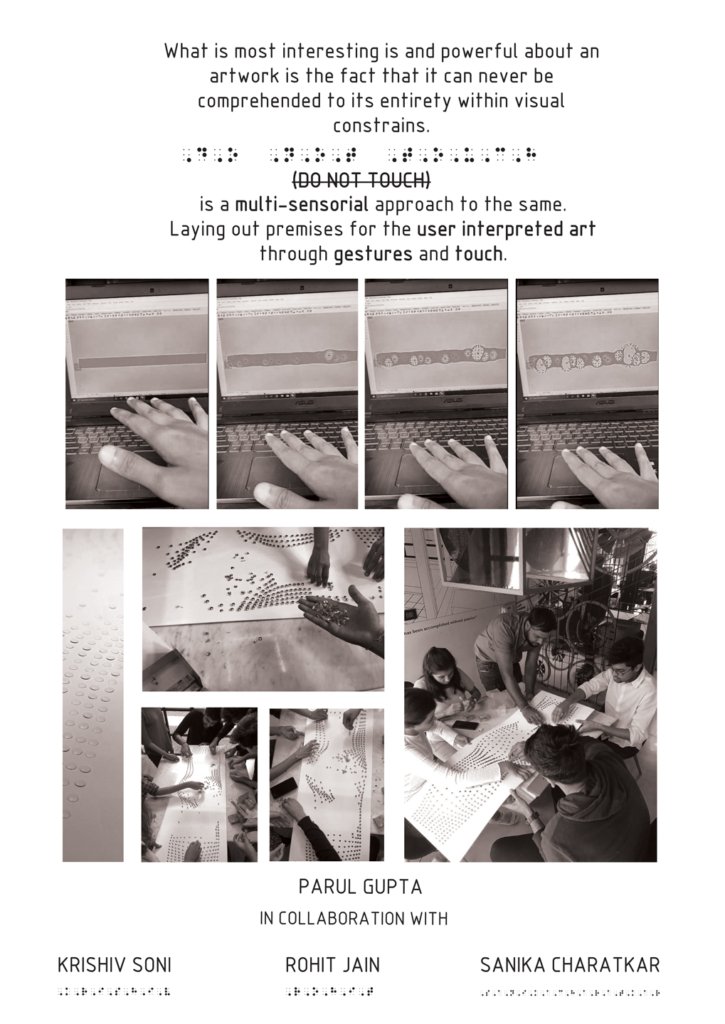
Do Not Touch
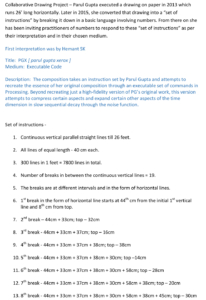
Lastly, the project also included four collaborative works that were proposed to expand upon the possibilities of other creative forms derived from a set of instructions. As a further continuation of my ‘Drawing Lab’ series, these engagements were done through a collaboration with the architects and professionals present during the time at RED Studio, where they were rearranged into different groups and utilised the given set of instructions to interact and further engage with.
To read further: https://parulguptastudio.com/work/drawing-lab/
Project: Space; Underscore I Red Studio, Mumbai
2020
Press Release: While Newton believed that smaller masses in space are fundamentally attracted into the gravitational “pull” of the heavier ones, Einstein suggests that objects essentially experience a spatial “push” that determines their movement and relative position concerning each other. Parul Gupta’s works are tensioned between the above “push” and “pull” of space, characterized in her experiments with the practice of drawing. In her sensitive perception that is intuitively moved by the silent suggestions of shifting lights, shadows, events and perspectives, Gupta essentially morphs space into a dynamic entity. Through her works, one can consider several scientific as well as perceptual registers of space- time at once, that get translated into drawings, sculptures and site-specific interventions. In doing so, Gupta underscores her works not simply as an aesthetic preoccupation, instead as a fertile field of knowledge.
A series of squares set within meticulous grids destabilize our modes of perception. Stable tilts, deviating parallels, unidentical equals and accurate unfits characterize these works. On a deeper gaze, seemingly stable Cartesian space begins to appear warped. Is one cheated into a perceptual labyrinth or has one entered a space of distortion? Gently diverging lines of the substratum and the surface leave one thinking about their interspatial relationships. The solid squares leap out of the paper, the drawings take one deeper into the infinitum of the grid. In this tension, the viewer is challenged on his/her grounds of rationality.
Gupta’s works index and overlap several spatio-temporal graphs that invite closer investigation. Densities of space created in folding, releasing, splitting, dissecting, fading or strengthening lines within an imagined continuum narrates numerous stories. Are these scores waiting to be sounded into music, or are these barcodes of a number yet to be counted? Are these the unfolded scales of early observatories that were built to map the cartography of the skies; or are these seismographic charts that mark the tectonic shifts to which our everyday gets attuned on ground? Are they streams of microwaves within which we are inevitably swimming or the rhythms of a pulsating organ emanating from within the body? As we consider these questions within the artist’s finely drafted lines, encompassing poetry of mathematics begins to emerge.
What does a line want to be? Perhaps in Gupta’s practice, this question is inexhaustive. The lines take multifarious forms creating degrees of opacity and translucency, rigidity and movement. Gupta demonstrates that her lines are continually breathing and have an agency of their own. They fold the viewers within forces of space to guide them into gentle action. Her works are orchestrations of line assemblies that do not limit themselves within the bounds of the frame. Instead, they speak to its edges and even bargain to enter from outside or escape from within them. It is here that her serious constructions assume an emancipatory quality of play and find their planes of engagement with the observer.
Anuj Daga
Photo Courtesy: Red Studio